AI, Playwright, and the transformation of testing in 2026
Playwright is up 180%, Selenium is down to 22%, 82% of QA people think AI will be key, and a new European law turns accessibility into a requirement. An analysis of the tools and trends reshaping the tester profile in Spain.
If the previous article was about where the jobs are and how much they pay, this one is about what those jobs ask for and where they're headed. I've spent weeks cross-checking tool adoption data, trend reports, and real job postings to understand what stack, what skills, and what mindset a QA in Spain needs today.
What I found surprised me in some areas and confirmed my suspicions in others. The short version is that the tooling ecosystem is in the middle of a full transition, AI is no longer an abstract concept but something that affects day-to-day testing, and there's a new legal requirement that's creating an entire specialization from scratch.
Playwright grows, Selenium holds on
The QA tooling ecosystem in Spain is going through a fast technological transition. Selenium is still the most mentioned tool in job postings and dominates in enterprise environments, banking, and large consultancies. But its global market share has fallen from 40% at the end of 2024 to 22% in August 2025.
Playwright is the fastest-growing framework, with an adoption rate of 45.1% among QA professionals and a 180% year-over-year increase in job postings mentioning it globally. In Spain, it shows up more and more in openings at modern companies and remote roles, usually paired with Python/Pytest or TypeScript/Jest. If you're interested in what you can do with Playwright beyond the obvious, I have a dedicated series on this blog where I use it as a full testing engine. Cypress holds a steady 14-20% share, popular with JavaScript frontend teams. And Appium is still the undisputed standard for mobile testing.
For programming languages, Java dominates enterprise QA in Spain, with typical combinations like Java + Selenium + JUnit, especially in banking, defense, and large consultancies. Python is growing the fastest, tied to the modern Python + Pytest + Playwright stack, especially in remote roles and product companies. JavaScript/TypeScript is a must if you work with Cypress or Playwright. C# shows up in .NET environments, but it's still a smaller niche.
The rest of the most in-demand stack looks like this. Postman is absolutely essential for API testing and appears in pretty much every job posting. JMeter still leads in enterprise performance testing, although K6 is overtaking it in modern DevOps teams because of its JavaScript syntax and serverless execution. For test management, Jira + Xray is the dominant combination, with TestRail as the usual alternative. In CI/CD, Jenkins keeps the enterprise lead while GitHub Actions is growing quickly, with 62% adoption in personal projects and 41% in organizations. 89.1% of QA teams already use CI/CD pipelines, which makes continuous integration knowledge close to a universal requirement.
For testing frameworks, Cucumber/BDD with Gherkin shows up often in enterprise environments, Pytest is growing alongside the Python ecosystem, and JUnit/TestNG remain the standard for Java teams. The clear trend is toward lighter, more modern stacks, with Playwright acting as the catalyst for change.
AI is no longer the future
82% of QA specialists believe artificial intelligence will be key to the future of testing, and 57% of organizations already use it to improve test efficiency. The question is no longer whether AI will affect testing, but how much and in what way. And the answer is nuanced, but pretty clear.
AI won't replace QA professionals, but it will wipe out purely manual and repetitive roles.
AI testing tools are already mainstream in 2025. Applitools leads in AI-powered visual testing, catching UI bugs that functional tests miss. Mabl offers self-healing tests that repair themselves when the UI changes, removing the biggest automation bottleneck, script maintenance. Testim (now Tricentis) uses ML for smart locators that adapt automatically. GitHub Copilot generates test code from prompts, and leading organizations are already experimenting with automatic test case generation from natural language requirements. IDC predicts that by 2026, 40% of large companies will have AI assistants integrated into their CI/CD pipelines.
The impact on QA jobs follows a clear pattern. Teams don't shrink, they change. Where there used to be 200 manual testers and 50 automation engineers, now there are 50 manual testers, 180 automation engineers, and 95 AI testing specialists, along with new roles like Safety Validation Engineer or Simulation Architect. The total grows by 50%, but the makeup changes radically. In Spain, the Guía Salarial Manfred 2026 confirms that QA is at a "complicated point," with expectations of partial replacement by AI agents.
The skills we need to add include Machine Learning fundamentals (datasets, training, metrics like Precision, Recall, and F1), prompt engineering applied to testing, the ability to test AI systems by validating fairness, bias, and safety, and solid command of AI-driven tools like Mabl, Testim, or Applitools. The tester is evolving from a "test executor" into a "quality orchestrator", someone who analyzes results from AI bots, designs testing strategies, and works across development, operations, and business.
Shift-left, the practice that stopped being aspirational
Shift-left testing has stopped being a nice idea in a slide deck and become standard practice in large companies. Modern QA collaborates from the first commit and takes part in backlog refinement, it doesn't wait until the end of the sprint. 72% of organizations already test in the earliest stages of development, up from 48% in 2020.
As the Spanish consultancy MindDen points out, "QA is no longer the last link in the chain, but an active player in error prevention." Still, we should be realistic and admit that many Spanish SMEs still follow traditional models where testing is concentrated at the end of the cycle.
What's interesting is how the concept is evolving toward Quality Engineering. QA no longer works in silos, but as part of multidisciplinary teams, taking part in pipeline design, setting up quality gates, and monitoring behavior after deployment. Hybrid profiles that combine QA with DevOps, security, or data are what Randstad Digital identifies as "the most in demand" in Spain for 2025. And 74% of Spanish companies had trouble finding these qualified profiles.
Accessibility, the new legal requirement creating jobs
The European Accessibility Act came into force on June 28, 2025 and turned digital accessibility into a legal requirement for e-commerce, banking, telecommunications, transport, and essential digital services. It's no longer a recommendation or a good practice, it's the law. The required technical standard is WCAG 2.1 level AA, and companies that don't comply face financial penalties.
This creates a new QA specialization that still has very few trained professionals. More than 80 million Europeans with some kind of disability are the direct beneficiaries, and the reality is that most development teams don't have anyone who knows how to test accessibility rigorously. For anyone looking to stand out in a competitive market, this is probably the niche specialization with the biggest immediate growth potential and the least competition for talent.
If you want somewhere to start, I have a couple of articles where I go into detail on color accessibility and contrast and on how to audit accessibility with axe-core and Playwright.
Certifications, are they worth it?
ISTQB is still the dominant standard, with more than 700,000 certificates issued globally. The most in-demand levels in Spain are Foundation Level (CTFL 4.0), Agile Tester Extension, and Advanced Level Test Automation Engineer. ALTEN Academy is the only accredited partner listed as a "Global Partner ISTQB" in Spain.
Certified testers earn between 10% and 25% more on average, which makes certification a worthwhile investment. That said, I personally think hands-on experience carries more weight than any certification in a technical interview, but having ISTQB on your CV is still a filter many consultancies and HR departments apply almost automatically.
The stack I'd recommend today
If I had to recommend a stack based only on demand data, it would be this.
Automation with Playwright or Selenium, combined with Python or Java depending on the sector you're aiming for. Python for modern companies and product, Java for enterprise and banking.
API testing with Postman as the bare minimum, and REST Assured or something similar as a complement.
CI/CD with solid knowledge of GitHub Actions or Jenkins.
Management with Jira/Xray as the de facto standard.
Performance with some knowledge of JMeter or K6 to set yourself apart.
And more and more, the ability to work with AI-assisted testing tools and understand their possibilities and limits.
Testing isn't disappearing, it's changing. And the speed of that change in Spain, with pressure from AI, the legal requirement around accessibility, and the consolidation of shift-left, means that anyone who adapts now has a huge advantage over anyone waiting until it becomes unavoidable.
Sources

Jose, author of the blog
QA Engineer. I write out loud about automation, AI and software architecture. If something here helped you, write to me and tell me about it.
Leave the first comment
What did you think? What would you add? Every comment sharpens the next post.
If you liked this
Radiografía del mercado QA en España en 2026
Entre 300 y 500 ofertas QA activas, una brecha salarial del 45% entre testing manual y automatización, y el 70% de los profesionales IT planeando cambiar de empresa. Radiografía completa del mercado QA en España con datos de Glassdoor, Manfred, Hays y Robert Walters.
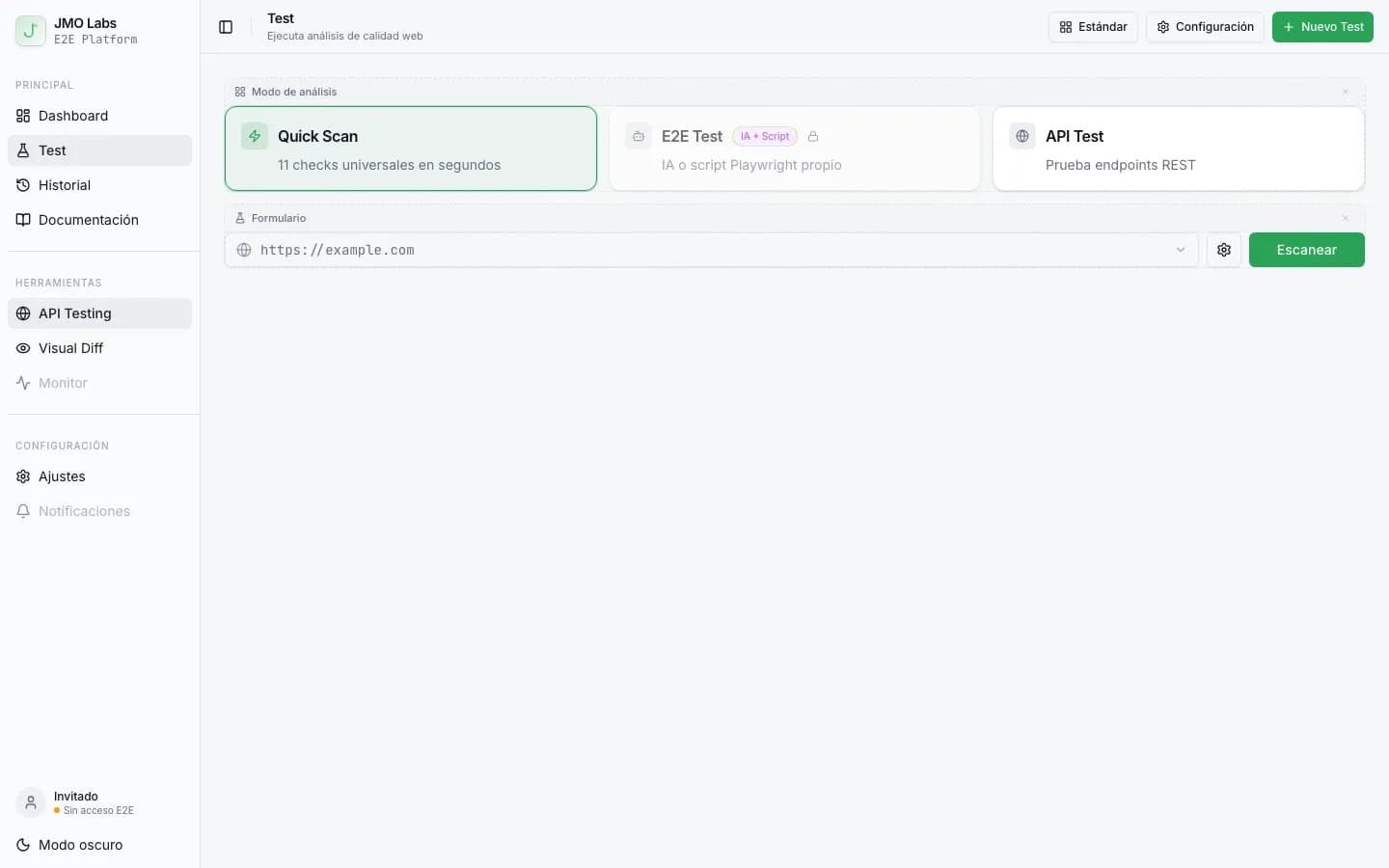
Construir una plataforma de testing con Playwright: arquitectura de JMO Labs
Playwright no es solo para tests E2E. En JMO Labs lo usamos como motor completo: 9 fases de comprobación, localizador de 9 estrategias con self-healing, grabación de vídeo, testing responsive con viewports reales y accesibilidad con axe-core.
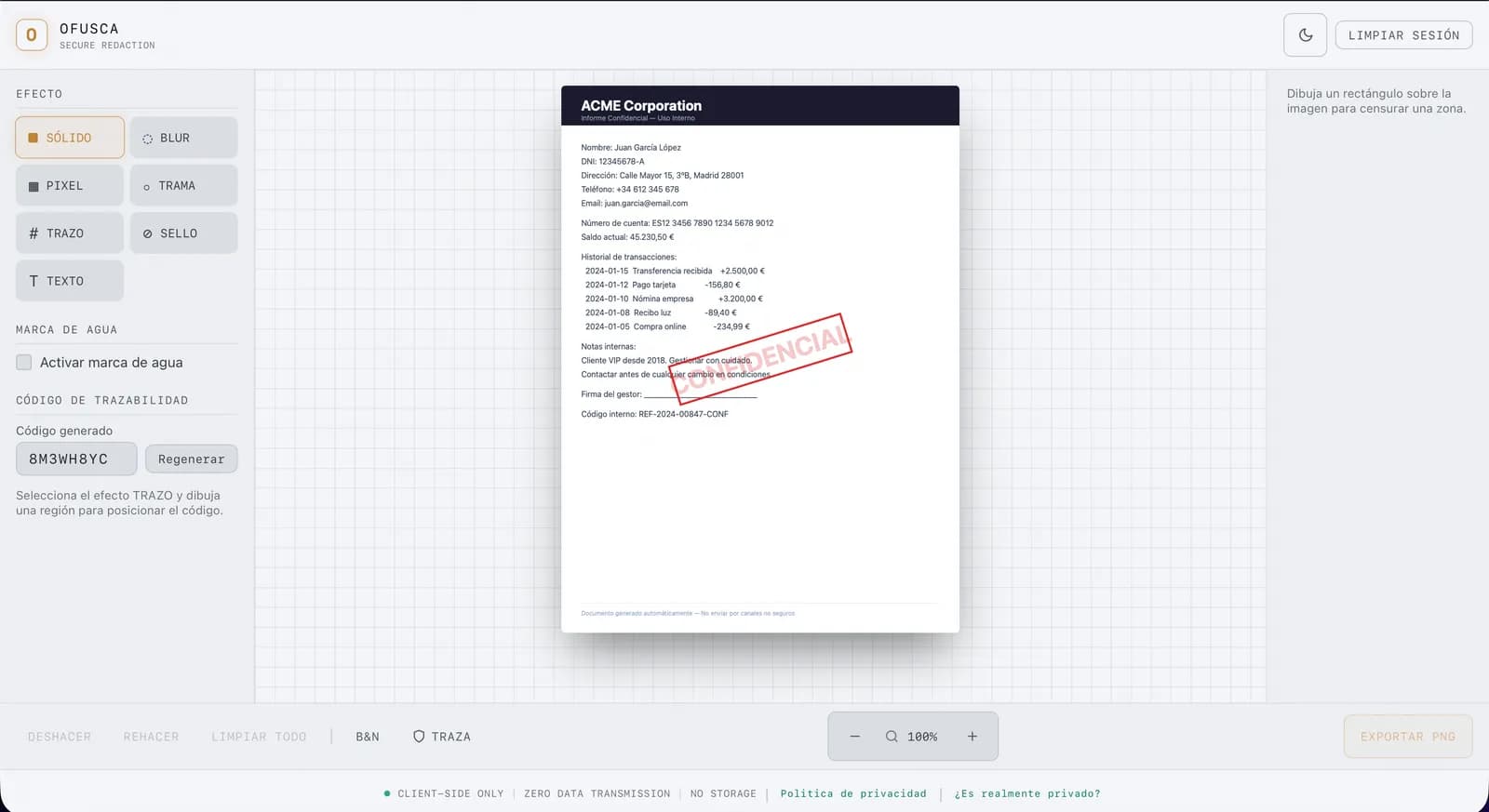
Cómo automatizamos 60 capturas de pantalla con Playwright
Mantener la documentación visual de una aplicación que evoluciona cada semana es una pesadilla. Te contamos cómo usamos Playwright para automatizar la generación de más de 60 capturas de pantalla en Ofusca, con optimización WebP incluida.